
Education is one of the few human institutions that has continuously evolved for centuries—shaped by culture, technology, economy, and society. Over the last 500 years, education has transformed from oral traditions and elite learning spaces into inclusive, technology-driven global classrooms.
In this blog, we explore
- how education evolved over the past five centuries,
- what dramatically changed in the last 10 years, and
- how forward-looking schools like Urban International School are shaping the future of learning.
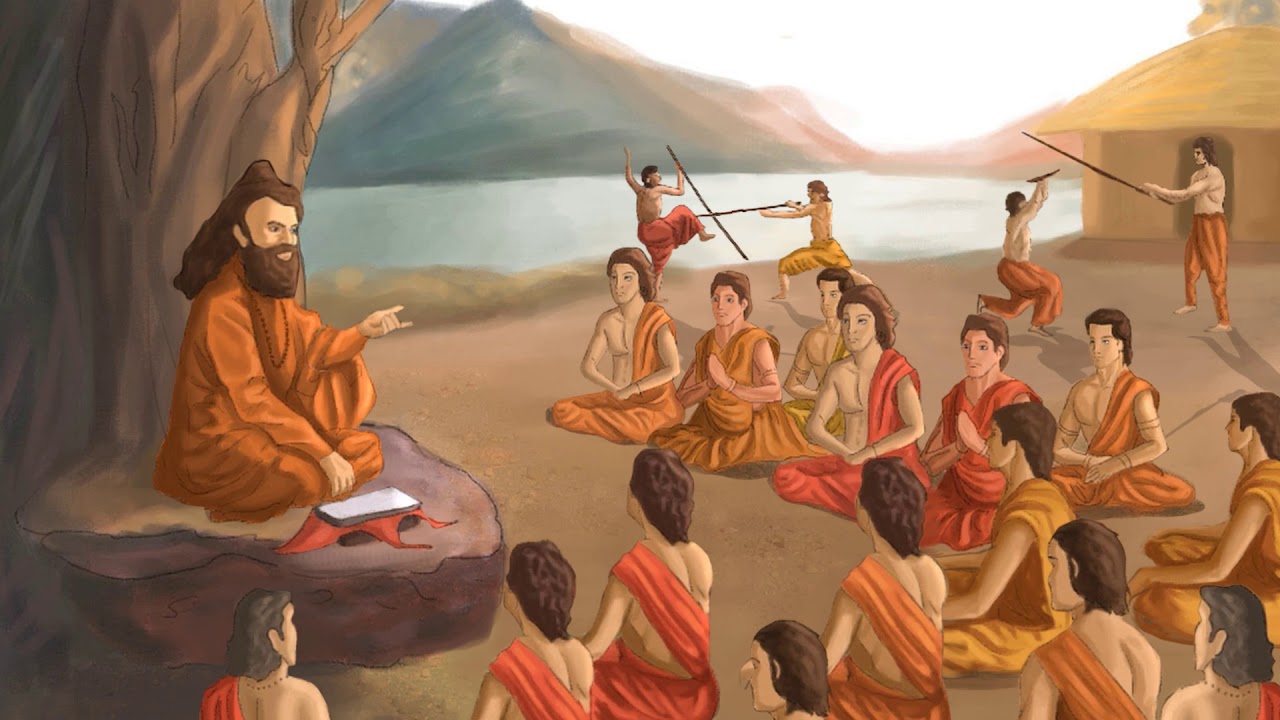
Education 500 Years Ago: Learning for the Few (1500–1700)
Five centuries ago, education was limited, localized, and exclusive.
Key characteristics:
- Learning took place in Gurukuls, monasteries, madrasas, and elite institutions
- Education was mostly oral, memory-based, and teacher-centric
- Subjects focused on philosophy, religion, astronomy, mathematics, and ethics
- Access was restricted to royalty, scholars, and specific communities
Education aimed at character formation and survival knowledge, not careers or innovation.
The Printing Revolution & Structured Schooling (1700–1800)
The invention of the printing press changed education forever.
What changed:
- Books became accessible and affordable
- Written curriculum replaced purely oral teaching
- Schools began following fixed syllabi
- Literacy expanded beyond elites
Education slowly transitioned from wisdom-sharing to content delivery.
Industrial Revolution: Mass Education Is Born (1800–1900)
The Industrial Age reshaped education to serve factories and administration.
Key shifts:
- Standardized classrooms with benches, blackboards, and exams
- Same-age grouping and fixed timetables
- Focus on discipline, obedience, repetition, and memorization
- Teachers became authority figures; students were passive learners
This model created workers—but not necessarily thinkers.
20th Century: Knowledge, Degrees & Globalization (1900–2000)
The 20th century saw education expand rapidly.
Major developments:
- Universal schooling and compulsory education
- Introduction of science, arts, commerce, and vocational studies
- Exams, grades, and degrees defined success
- Schools became gateways to jobs and social mobility
While access improved, creativity and individuality often took a back seat.
The Biggest Shift: The Last 10 Years (2015–2025)
More change has occurred in the last decade than in the previous 200 years combined.
🔹 From Memorization to Application
- Learning is now concept-based and experiential
- Students learn why and how, not just what
🔹 From Classrooms to Connected Learning
- Smart boards, tablets, cloud platforms, and hybrid learning
- Learning happens anytime, anywhere
🔹 From Subjects to Skills
- Focus on critical thinking, problem-solving, communication, creativity
- STEM, STREAM, AI, Robotics, Coding, Design Thinking
🔹 From Teacher-Centric to Student-Centric
- Teachers are mentors and facilitators
- Students explore, experiment, and innovate
🔹 From Exams to Real-World Readiness
- Emphasis on life skills, emotional intelligence, collaboration
- Career guidance starts early—not after school ends
500 Years vs Last 10 Years: A Simple Comparison
| Then (1500–1900) | Now (2015–2025) |
| Oral & textbook learning | Experiential & digital learning |
| Teacher speaks, students listen | Students explore, teachers guide |
| One-size-fits-all education | Personalized learning paths |
| Marks defined success | Skills + mindset define success |
| Limited access | Global exposure |
The Future of Education: What Lies Ahead
Education is no longer about producing exam toppers—it’s about creating future-ready humans.
The future classroom will focus on:
- Artificial Intelligence & Human Intelligence together
- Interdisciplinary learning
- Ethical values, empathy, and leadership
- Innovation, entrepreneurship, and global citizenship
Urban International School: Aligned With the Future of Education
At Urban International School, education is designed keeping past wisdom, present realities, and future needs in balance.
How UIS reflects modern education:
- CBSE & Cambridge curriculum with global standards
- STREAM, STEM & AI Labs for hands-on learning
- Skill-based, experiential pedagogy
- Focus on values, innovation, and individuality
- Preparing students not just for exams—but for life
Conclusion: Education Has Evolved—So Should Schools
From Gurukuls to global smart classrooms, education has continuously evolved. The last 10 years have proven one truth clearly:
Schools that don’t evolve will prepare students for a world that no longer exists.
Urban International School stands committed to being a future-ready institution, shaping confident learners, critical thinkers, and responsible global citizens.
1 Comment
Great article about CBSE schools, digital learning, and student success.
A valuable read for parents searching for the best school in Hyderabad.